
Complete Guide to HOA Management in 2026
Everything HOA board members need to know about running a homeowners association effectively — from dues collection to compliance tracking and resident communication.
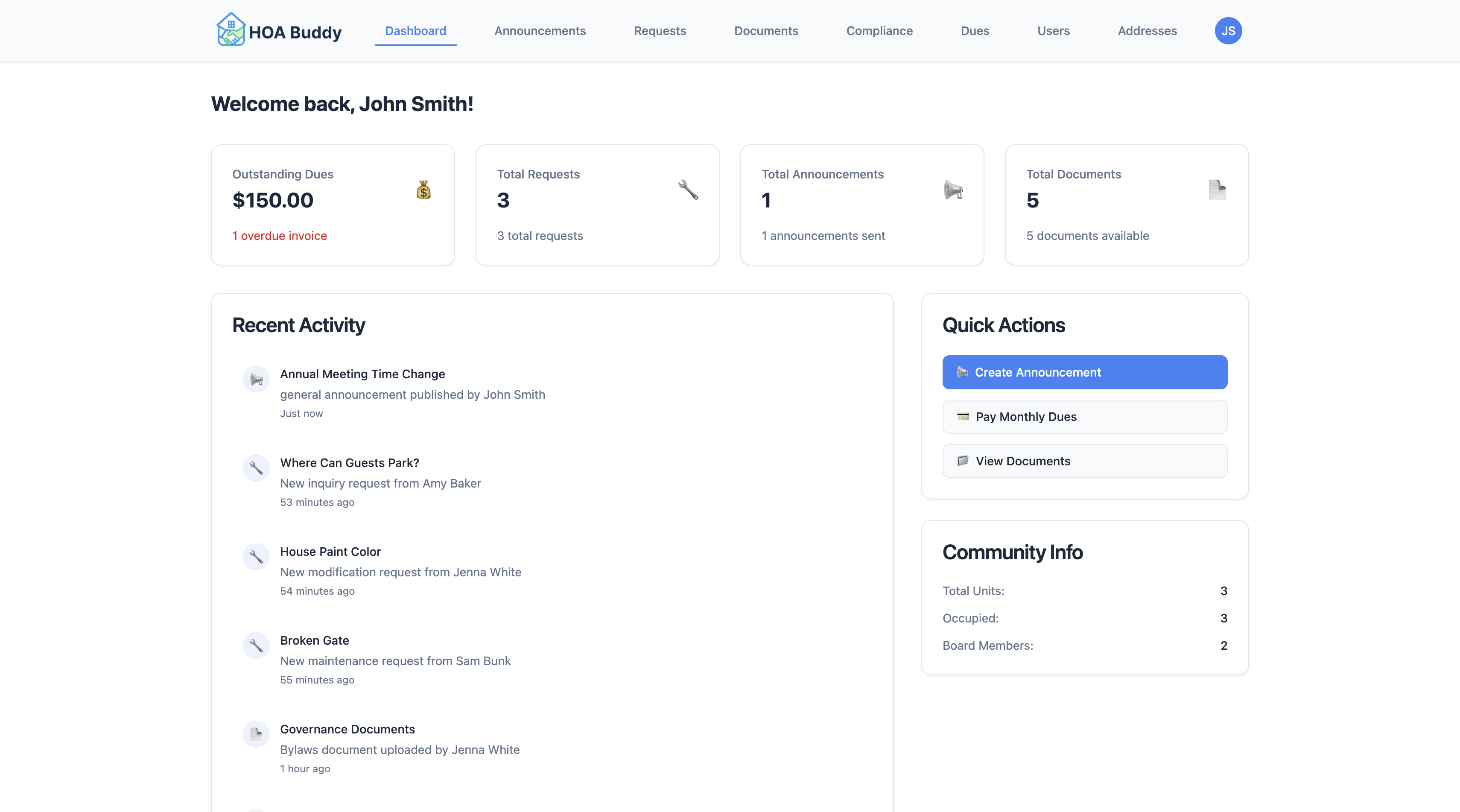
Running a homeowners association is a bigger job than most board members expect when they raise their hand at the first meeting. You're responsible for the financial health of the community, enforcing rules fairly, maintaining common areas, and keeping dozens (or hundreds) of residents informed and engaged — often as a volunteer.
This guide covers every major area of HOA management so your board has a clear picture of what's involved and how to tackle it effectively.
Understanding Your HOA's Core Responsibilities
Every HOA has four foundational responsibilities regardless of size:
Financial management — collecting dues, paying vendors, maintaining reserves, and producing accurate financial reports. The Treasurer typically owns this, but the full board shares accountability.
Property maintenance — keeping common areas, amenities, and shared infrastructure in good condition. This means vendor contracts, inspection schedules, and a reserve fund large enough to handle major repairs.
Rule enforcement — applying CC&Rs (Covenants, Conditions & Restrictions) consistently and fairly. Inconsistent enforcement is one of the most common sources of resident disputes and legal exposure.
Communication — keeping residents informed about decisions, events, maintenance, and changes. Poor communication breeds distrust, even when the board is making good decisions.
Dues Collection: The Financial Engine
Without reliable dues collection, everything else falls apart. HOA dues typically fund daily operations (landscaping, utilities, management fees) and build reserves for future capital expenditures.
Set the right amount. Work backward from your annual operating budget plus reserve contributions. Most HOA advisors recommend the reserve fund cover 70–100% of projected replacement costs. Under-funded reserves are one of the leading causes of special assessments.
Get residents paying online. Mailed checks create lag time, manual reconciliation work, and lost payments. Online payment systems let residents pay anytime, generate automatic receipts, and give the Treasurer a real-time view of collection status.
Automate reminders. Chasing late payments one by one is a time sink. Automated reminder emails at 7, 14, and 30 days past due dramatically reduce the number of accounts that reach the collections stage.
Document your process. Your collection policy (grace periods, late fees, lien procedures) should be in writing, approved by the board, and communicated to every resident.
Maintenance Request Management
Residents submit maintenance requests. Without a system, these arrive by phone, email, text, and in-person conversation — and some inevitably fall through the cracks.
A basic maintenance workflow:
- Resident submits a request (online form or portal)
- Board member or property manager acknowledges receipt
- Request is assigned to the appropriate vendor or committee
- Work is completed and documented
- Resident is notified of resolution
The key is a single place where every request is logged and tracked. Verbal requests, sticky notes, and email threads don't scale — and they leave the HOA with no audit trail if a resident disputes whether a request was ever received.
Violation Tracking
Enforcing community rules is one of the most sensitive parts of HOA management. Done inconsistently or without documentation, it creates legal exposure and damages community relationships.
Apply rules uniformly. The board cannot selectively enforce rules based on which resident is involved. Documented inspection schedules — where the same areas are reviewed on the same cadence — are the cleanest protection against claims of selective enforcement.
Document everything. Each violation notice should include the date, the specific rule violated, photos where applicable, and a clear timeline for resolution. Digital records are searchable and can't be lost.
Use a graduated response. Most residents will correct a violation if they receive a polite notice explaining the issue. Reserve formal hearings and fines for repeated or willful non-compliance.
Resident Communication
Informed residents are less likely to be surprised by decisions, more likely to pay dues on time, and more likely to participate constructively in the community.
Announcement channels. A combination of email and a community portal works well. Email reaches residents who don't log in regularly; the portal gives residents a place to find information on their own schedule.
Meeting minutes. Board meeting minutes should be available to all residents promptly after meetings. Transparency about decisions — even unpopular ones — builds long-term trust.
Proactive vs. reactive. The best-run HOAs communicate proactively (upcoming maintenance, budget updates, rule reminders) so residents aren't caught off guard and don't need to reach out to ask basic questions.
Document Management
HOAs accumulate a lot of paperwork: governing documents, meeting minutes, financial reports, contracts, insurance certificates, violation histories, and more. Keeping these organized and accessible saves time and reduces risk.
Digital document storage with access controls (some documents are board-only, others are available to all residents) is the modern standard. A filing cabinet in the Treasurer's garage is not a document management system — it disappears when that person leaves the board.
Key documents every HOA should store securely and keep current:
- CC&Rs and bylaws
- Rules and regulations
- Board meeting minutes (all years)
- Annual budgets and financial statements
- Vendor contracts
- Insurance policies
- Reserve study
Technology Makes the Difference
Volunteer board members have limited time. The HOAs that run smoothly are usually the ones that have replaced manual processes (spreadsheets, email threads, phone calls) with purpose-built software that automates routine tasks.
HOABuddy is built specifically for small HOA management — it handles dues collection and payment processing via Stripe, maintenance request tracking, violation management, document storage, and resident communication from a single dashboard. Every new HOA gets a 30-day free trial with full access; your card is collected at signup but not charged until the trial ends, and you can cancel before then.
Key Takeaways
Good HOA management comes down to systems and consistency. You don't need to be perfect — you need documented processes that any board member can follow, and the right tools to make following them efficient.
- Collect dues online and automate reminders
- Log every maintenance request in a single place
- Document violations with photos and timestamps
- Communicate proactively, not just reactively
- Store all governing documents digitally with version control
- Fund your reserves adequately before you need them
The board that gets these basics right handles transitions, disputes, and unexpected expenses far better than the one improvising with spreadsheets and good intentions.
Ready to simplify HOA management?
HOABuddy handles dues collection, resident communication, maintenance tracking, and more — free for 30 days.
Start Free TrialLearn more about HOA Management Software →