
How to Streamline HOA Dues Collection (And Stop Chasing Late Payments)
A practical guide for HOA board members on modernizing dues collection — from setting the right amount to automating reminders and accepting online payments.
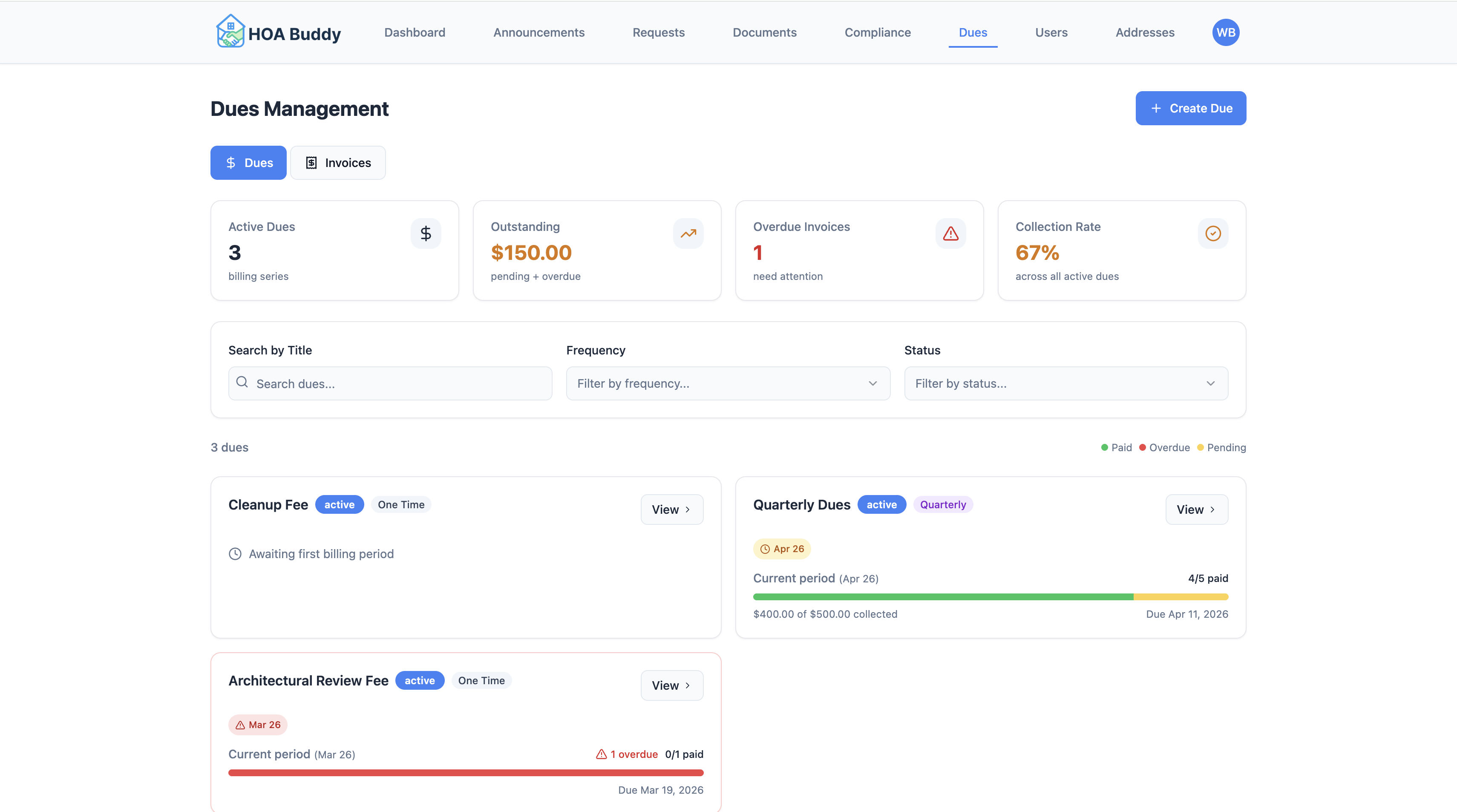
If you've ever spent an afternoon reconciling who paid, who sent the wrong amount, and who mailed a check to the wrong address — you already know that manual dues collection doesn't scale. For most HOA boards, it's one of the most time-consuming and frustrating parts of the job.
The good news: it's also one of the most automatable. This guide walks through a modern dues collection setup that reduces administrative overhead and gets more residents paying on time.
Why Dues Collection Gets Complicated
Manual collection creates several problems that compound over time:
Tracking is fragmented. Payments arrive by check, Venmo, bank transfer, and sometimes cash. Reconciling these against a resident roster in a spreadsheet takes hours every month and is error-prone.
Late payments require manual follow-up. Without automated reminders, the Treasurer has to personally contact delinquent residents — a task that's awkward, time-consuming, and easy to delay.
No audit trail. When a resident claims they paid and the HOA says they didn't, a spreadsheet isn't proof. A proper payment processor creates an immutable record of every transaction.
Inconsistent fee application. Manual processes make it hard to apply late fees consistently, which creates fairness disputes and weakens your collection policy.
Step 1: Build a Solid Collection Policy
Before changing your collection process, make sure your policy is documented and board-approved. It should specify:
- Due date — typically the 1st of the month or quarter
- Grace period — typically 10–15 days before late fees apply
- Late fee amount — flat fee or percentage (check your state's limits)
- Escalation steps — second notice, formal demand letter, lien filing
- Hardship policy — payment plans for residents in temporary financial difficulty
The policy should be distributed to every resident and available in your community portal. When the policy is clear and consistent, late-fee disputes become much less common.
Step 2: Move to Online Payments
This is the single biggest lever for improving collection rates and reducing administrative work.
Online payments offer residents convenience — they can pay from their phone at midnight if that's when they remember — and they give the HOA an automated record of every transaction. No more checking if a check has cleared. No more lost envelopes.
What to look for in an HOA payment processor:
- Direct deposit to the HOA's account (not a third-party escrow)
- Automatic receipts sent to the resident immediately on payment
- Resident-facing transaction history so residents can look up their own payment history
- Reporting that the Treasurer can export for financial statements
With HOABuddy, dues are collected via Stripe Checkout — residents pay by card or ACH, the HOA receives the full invoice amount, and a small processing fee (2.9% + $0.30) is added to the resident's payment. No processing fees come out of the HOA's pocket.
Step 3: Automate Invoice Generation
One-time dues are straightforward. Recurring dues — monthly assessments, quarterly fees — are where manual processes really break down.
With automated invoice generation, you set up the due amount, frequency, and recipients once. The system generates and sends invoices on schedule without any board action. When a resident's status changes (moves out, new property owner), you update the record once and the automation adjusts.
This is especially valuable for HOAs with high turnover or with multiple due types running on different schedules (e.g., monthly assessments plus a separate quarterly maintenance fee).
Step 4: Automate Overdue Notifications
When an invoice goes past due, residents should hear about it automatically — without the Treasurer having to personally reach out to each delinquent account.
Most residents who pay late aren't willfully delinquent — they forgot, or the due date fell at an inconvenient time. An automated overdue notice usually resolves this without any awkward personal outreach.
Keep overdue notification emails:
- Short and clear — amount due, original due date, payment link
- Non-punitive in tone — especially for a first overdue notice
- Documented — an automated paper trail is useful if the account later escalates to formal collection
Step 5: Track and Report Delinquencies
The Treasurer should have a real-time view of:
- Total dues billed for the current period
- Payments received
- Outstanding balance and percentage collected
- Accounts past due by 30, 60, and 90+ days
This information should be included in the monthly financial report to the full board. Delinquency rates that creep above 10–15% warrant a closer look at the collection process or potentially the amounts being assessed.
The ROI of Modernizing Dues Collection
A real-world example: if your HOA has 80 units paying $150/month, that's $144,000 in annual dues. A 10% improvement in on-time collection rate is $14,400 in cash flow recovered. Most HOA payment software costs a fraction of that.
Beyond the dollars, the Treasurer gets their time back. Monthly close goes from a multi-hour reconciliation exercise to a quick review of a dashboard.
Getting Started
If you're currently using checks and a spreadsheet, the transition to online payments is easier than it sounds:
- Set up your HOA's bank account to accept ACH transfers or connect Stripe
- Import your resident roster and property list
- Configure your due templates (amount, frequency, recipients)
- Send residents a single onboarding email explaining the new process and how to set up their payment method
- Enable overdue notifications
Residents typically appreciate the convenience. The small number who prefer checks can often continue doing so while the majority of the community moves online — reducing your reconciliation burden even if not eliminating it entirely.
HOABuddy's dues module handles all of this: recurring invoice generation, Stripe Checkout for online payment, automated overdue notifications, and a Treasurer dashboard showing collection rate and overdue accounts. Try it free for 30 days.
Ready to simplify HOA management?
HOABuddy handles dues collection, resident communication, maintenance tracking, and more — free for 30 days.
Start Free TrialLearn more about HOA Dues Collection Software →